Introduction
The future of search is no longer just about rankings.
For years, businesses focused on keywords, backlinks, and search engine rankings to improve their online visibility. While these factors still matter, AI-powered search platforms are changing how people discover information, compare businesses, and find solutions.
Today, users are increasingly asking questions directly to platforms such as ChatGPT, Google AI Overviews, Gemini, Perplexity, and Claude. Instead of browsing multiple websites, they often receive direct answers generated by AI systems.
This shift means businesses need to focus on more than traditional search rankings. They must establish credibility, demonstrate expertise, and build a recognizable presence across the web.
This is where AI powered SEO services become relevant. They help businesses adapt their SEO strategies to evolving search experiences while focusing on content quality, entity recognition, technical foundations, and brand authority.
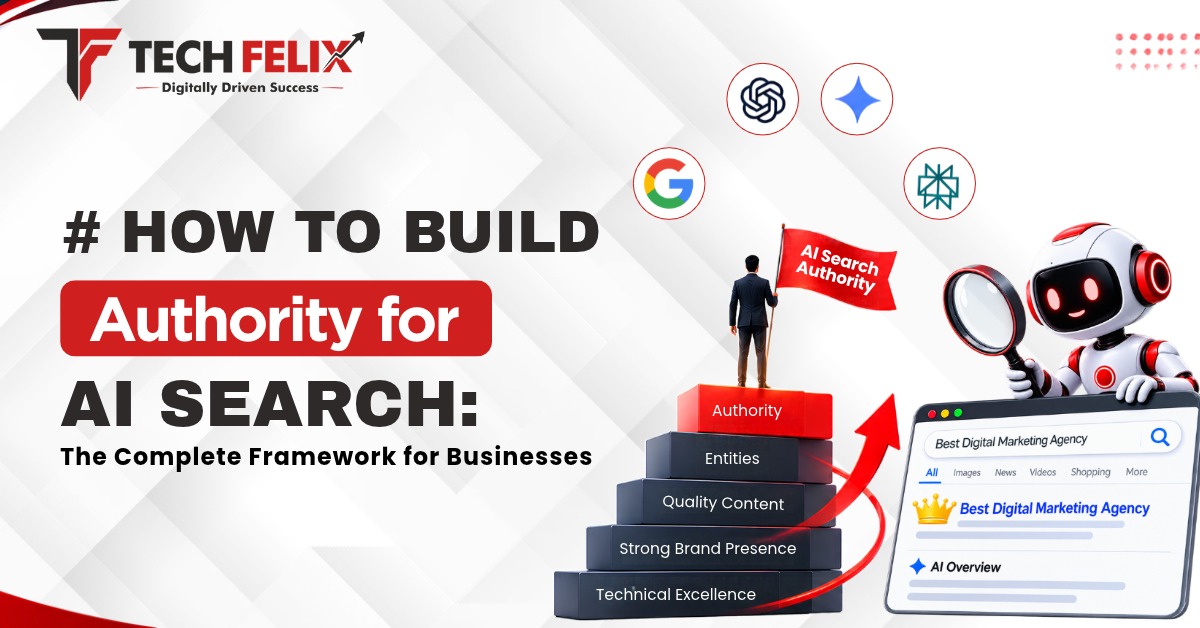
To build visibility in AI search, businesses must become reliable sources of information that search platforms can understand, reference, and recognize.
What Is Authority in AI Search?
Authority is the level of trust and credibility that search engines and AI systems associate with a business, website, brand, or individual.
When AI systems generate answers, they use available information to identify sources that may be relevant and trustworthy. A website that consistently demonstrates expertise and provides useful information has a stronger foundation for building recognition.
Authority is built through multiple signals, including:
- Expertise
- Experience
- Reputation
- Brand mentions
- Customer reviews
- Content quality
- Industry recognition
- Backlinks
- Brand awareness
These signals work together to establish how a business is understood across its website and external platforms.
The stronger and more consistent these signals become, the easier it can be for search systems to understand the business and its areas of expertise.
Why Authority Matters More Than Rankings
Traditional SEO has largely focused on improving website visibility through relevant keywords, optimized pages, and backlinks.
AI search introduces another dimension. Businesses must also establish why their information and expertise deserve to be considered.
For example, when a user asks:
“Who is the best SEO agency for ecommerce businesses?”
AI systems may consider several factors while generating a response:
- Which companies have an established online presence?
- Which brands are recognized within the industry?
- Which organizations demonstrate relevant expertise?
- Which sources consistently publish useful information?
Authority helps businesses build credibility around these signals.
This is why companies should not focus exclusively on keyword rankings. They should also strengthen their brand presence, publish helpful resources, and maintain a consistent identity across digital platforms.
Combining SEO Services with AI SEO Services can help businesses work towards stronger search visibility and a more credible online presence.
The Four Pillars of AI Search Authority
Building authority requires a combination of different strategies. Four important areas are topical authority, entity authority, brand authority, and reputation authority.
Pillar 1: Topical Authority
Topical authority refers to how comprehensively your website covers a particular subject.
Publishing one article about a topic is not enough to demonstrate complete expertise. A website should provide useful information across related subjects and connect those resources through relevant internal links.
For example, an SEO-focused website should cover:
- Technical SEO
- Local SEO
- On-Page SEO
- Off-Page SEO
- Link Building
- SEO Audits
- AI SEO
- Content Marketing
Relevant service pages include:
- Technical SEO Services
- On-Page SEO Services
- Off-Page SEO Services
- Local SEO Services
- Link Building Services
- SEO Audit Services
When these pages provide meaningful information and connect naturally, they help establish a clear relationship between your website and its areas of expertise.
The broader and more organized your content coverage becomes, the stronger your topical foundation can be.
Pillar 2: Entity Authority
AI systems increasingly use entities to understand relationships between businesses, people, products, and services.
An entity may be:
- A company
- A brand
- A service
- A person
- A product
Strong entity authority develops when search systems can consistently associate a business with its industry, services, and expertise.
For example, a digital marketing business may be associated with:
- SEO Services
- AI SEO
- Technical SEO
- Content Marketing
- Digital Marketing
These associations should remain consistent across the website, business profiles, directories, and other relevant online sources.
Accurate business information, clear service descriptions, relevant structured data, and consistent brand references can help search systems understand the business more effectively.
Entity recognition is not about repeating keywords everywhere. It is about creating clear and consistent information that explains what a business does and what it is known for.
Pillar 3: Brand Authority
Brand authority extends beyond your website.
AI-powered search platforms can encounter information about businesses across different online sources. These may include industry publications, business directories, podcasts, interviews, guest posts, and social media discussions.
Examples of brand-building opportunities include:
- Industry publications
- News websites
- Business directories
- Podcasts
- Interviews
- Guest posts
- Social media discussions
A recognizable brand with consistent information across relevant platforms can establish a stronger online identity.
This is why businesses should invest in visibility beyond their own websites. Publishing useful insights, participating in industry discussions, and earning relevant brand mentions can contribute to long-term recognition.
Pillar 4: Reputation Authority
Trust is an important part of building a credible online presence.
Customers often evaluate a business through reviews, testimonials, case studies, and publicly available information before making a decision. These reputation signals also help establish a clearer picture of a brand across the web.
Positive reputation signals include:
- Client reviews
- Testimonials
- Case studies
- Industry recognition
- Awards
- Success stories
Helpful trust-building pages include:
- About Us
- Portfolio
- Client Testimonials
- Review Management Services
- Online Reputation Management Services
These resources help visitors understand the business, evaluate its work, and find evidence of its experience.
Create Content That Demonstrates Expertise
High-quality content is one of the important ways to build topical authority and demonstrate industry knowledge.
However, publishing more articles does not automatically establish expertise. Content should answer relevant questions, provide meaningful information, and offer value beyond basic explanations.
Examples of authority-building content include:
Original Research
Share findings from research, website analysis, or industry observations. Original information can give readers something useful that they may not find in generic articles.
Industry Studies
Publish detailed studies around relevant industry topics, such as AI search trends, changing search behaviour, or SEO performance.
Case Studies
Explain how a business addressed a particular challenge, what strategy was implemented, and what outcomes were observed.
Practical Frameworks
Create step-by-step resources that help readers understand and apply a particular process.
Detailed Guides
Comprehensive guides can cover related questions, explain important concepts, and connect readers to additional resources.
Businesses can use Content Marketing Services and SEO Content Writing Services to develop content that communicates expertise and supports a consistent publishing strategy.
The objective should be to create resources that genuinely help readers rather than publishing articles simply to target more keywords.
Build a Recognizable Brand
Many businesses focus entirely on improving search rankings, but long-term visibility also depends on how well people recognize and understand a brand.
A recognizable brand has a consistent identity, clear messaging, and a defined connection with its industry.
Businesses can strengthen brand recognition through:
- Consistent branding across digital platforms
- Industry participation
- Thought leadership
- Educational content
- Conference appearances
- Podcasts
- Guest articles
- Public relations
Every relevant interaction creates another opportunity for people to become familiar with the business.
Maintaining consistent business details, service information, and brand messaging across platforms also helps avoid confusion.
Brand recognition should be developed through genuine industry participation and useful contributions rather than unnecessary mentions across unrelated websites.
Earn High-Quality Mentions Across the Web
Backlinks remain valuable for SEO, but businesses should also pay attention to brand mentions across relevant online platforms.
A brand mention can appear with or without a hyperlink. For example, an industry publication may refer to a company while discussing a particular service or sharing an expert opinion.
Examples include:
- Industry blog references
- Podcast discussions
- Expert roundups
- News coverage
- Social media mentions
The quality and relevance of these references matter. Mentions from trustworthy and industry-related sources can help strengthen a brand’s online presence.
Businesses should focus on creating useful content, developing industry relationships, contributing expert insights, and earning references naturally.
The goal is to build a credible presence across the web instead of collecting mentions from unrelated sources.
Use Case Studies to Build Trust
Case studies are useful resources for demonstrating real experience and problem-solving ability.
They explain how a business approaches a challenge, implements a strategy, and evaluates the results.
Strong case studies should include:
- Challenges: Explain the problem or business requirement.
- Strategy: Describe the approach selected to address it.
- Implementation: Outline the activities and steps involved.
- Results: Present the outcomes supported by available data.
- Lessons Learned: Share useful insights from the experience.
Case studies provide readers with practical examples instead of relying only on general statements about expertise.
They can also help potential customers understand how a business works and whether its experience is relevant to their requirements.
Whenever possible, use accurate data, clear explanations, and genuine project details. Avoid unsupported performance claims because credibility depends on providing information that can be verified.
Why Technical SEO Supports Authority
Authority alone is not enough. Search engines also need to crawl, access, and understand the information available on your website.
Technical SEO helps establish the foundation required for a website to function properly and make its content accessible.
Important areas include:
- Crawlability
- Indexability
- Site structure
- Internal linking
- Structured data
A website with technical problems may face difficulties getting its important pages discovered, crawled, or indexed.
Businesses often use Technical SEO Services and SEO Audit Services to identify technical issues and improve website foundations.
Regular technical reviews can help businesses identify problems that affect website accessibility, structure, and search performance.
A technically sound website supports the wider authority-building strategy by making its information easier to discover and understand.
Develop Strong Internal Linking
Internal linking helps distribute authority throughout a website and establishes relationships between related pages.
When relevant pages link to one another, visitors can explore connected topics without having to search for every resource separately.
For example, this article should connect naturally to related resources such as:
- How ChatGPT Finds and Mentions Websites
- How Google AI Overviews Impact SEO
- GEO vs Traditional SEO
- How to Rank in AI Search Results
- Entity SEO Explained
- AI Search Optimization Checklist
These connections can create a structured content ecosystem around AI search and SEO.
Internal links should use descriptive anchor text and point to relevant pages. Avoid adding links simply to increase their number. Each link should provide a useful next step for readers.
A well-organized internal linking structure helps users navigate the website while giving search systems additional context about the relationships between its pages.
Why International Authority Matters
AI search is not limited to one geographical market.
A business located in one country may provide services to customers across different regions. However, reaching international audiences requires relevant information, clear service descriptions, and an understanding of the markets being targeted.
Businesses serving the following regions may need to develop content that addresses their audiences’ requirements:
- United States
- United Kingdom
- Canada
- Australia
- UAE
- Europe
Rather than publishing the same information for every market, businesses should create relevant resources that reflect their services and target audiences.
Organizations targeting global markets often strengthen their visibility through International SEO Services.
A well-planned international presence can help businesses communicate their expertise across different markets while maintaining consistent brand information.
Common Authority-Building Mistakes
Building authority requires a consistent approach. Certain mistakes can make it difficult for businesses to establish a clear and credible online presence.
Publishing Thin Content
Short or generic articles may not provide enough information to demonstrate expertise. Focus on useful, comprehensive resources that answer readers’ questions.
Ignoring Brand Building
A website should not be the only place where a business establishes its identity. Relevant external mentions and industry participation also contribute to brand recognition.
Creating Random Articles
Publishing unrelated topics without a clear content structure can make it difficult to establish topical authority. Organize content around relevant subjects and connect related resources.
Neglecting Reviews
Reviews and testimonials help potential customers evaluate a business. Encourage genuine feedback and maintain accurate review information.
Weak Internal Linking
Disconnected pages make navigation difficult and reduce opportunities to establish meaningful content relationships. Link related resources wherever it benefits readers.
No Original Insights
Repeating information already available across the web does little to demonstrate unique expertise. Include practical experience, useful observations, and original perspectives wherever possible.
AI Search Authority Checklist
Before publishing content or making changes to your website, review the following points:
- Does this content demonstrate relevant expertise?
- Does it strengthen topical authority?
- Does it support clear entity recognition?
- Does it help build trust?
- Does it provide unique value to readers?
- Does it reinforce brand authority?
- Does it connect to relevant pages through internal links?
- Is the website technically accessible?
- Are business details consistent across platforms?
- Would an AI system be able to understand the subject and context of this information?
Use this checklist to review your content and identify areas that need improvement.
Building authority is an ongoing process. Consistency across content, technical SEO, brand mentions, and reputation management is more valuable than making isolated changes.
Conclusion
Authority is becoming an important part of visibility across AI-powered search experiences. Businesses that focus only on keywords and traditional rankings may overlook the wider signals that help establish credibility and recognition.
A strong approach involves demonstrating expertise, building topical coverage, maintaining consistent entity information, earning relevant brand mentions, and developing a trustworthy online reputation.
By using AI powered SEO services India alongside SEO Services, content marketing, technical SEO, and reputation management, businesses can work towards improving their presence across traditional search engines and AI-powered platforms.
The objective is not simply to appear in search results. It is to build a brand that people can recognize, understand, and trust.
In the evolving world of AI search, authority is not built through keywords alone. It grows through consistent expertise, useful information, and a credible digital presence.